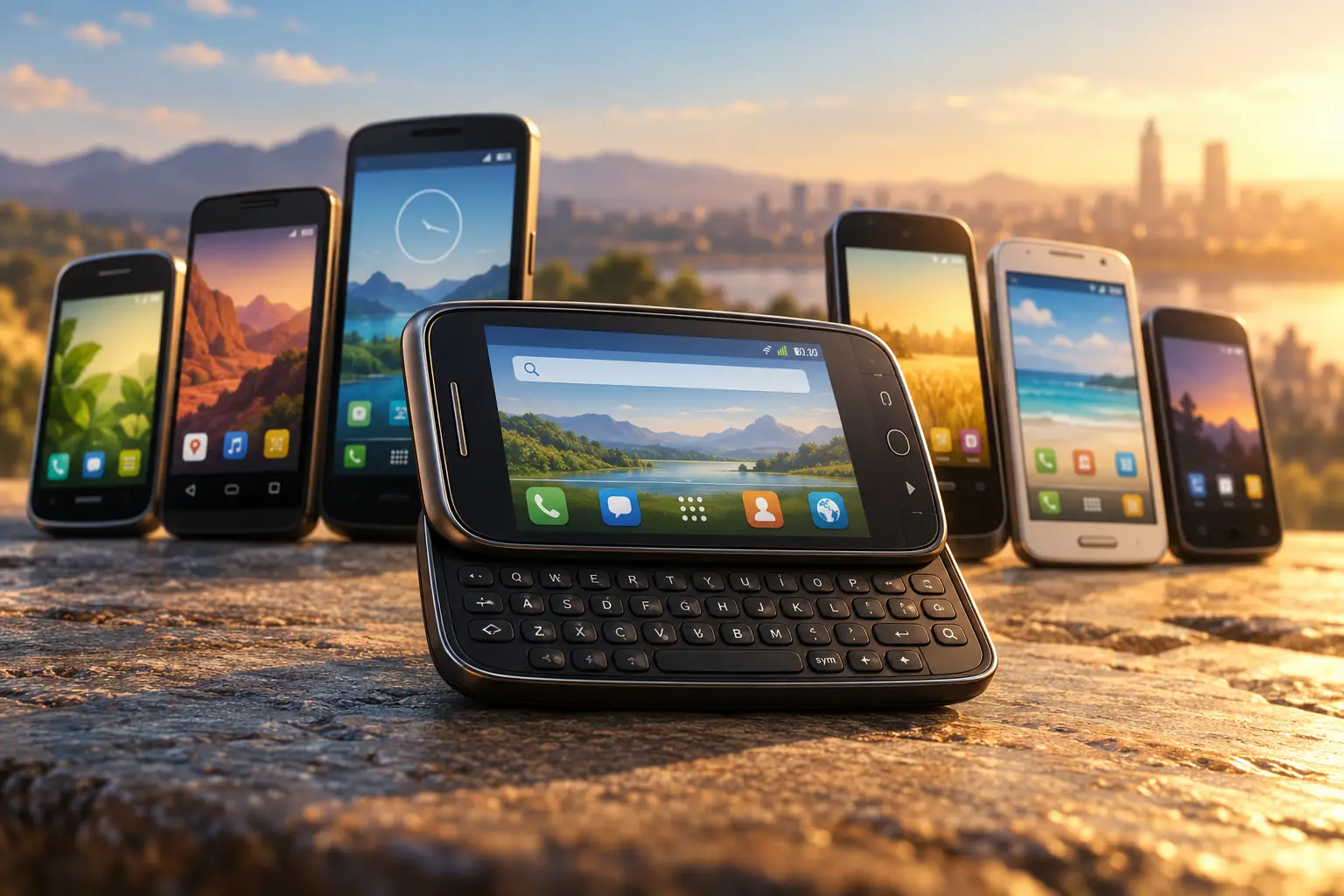
On November 5, 2007, people waiting for a Google phone got a surprise: Google said it was not announcing one.
Instead, Andy Rubin, Google’s mobile software leader, announced something far less exciting to hold in your hand: a plan for phone software that many companies could use. His announcement about the missing “Gphone” made the difference plain. Google wanted more than a single device.
It was a bold answer to a strange problem. Mobile phones were already everywhere, but their software often kept people in separate worlds. Each maker had its own menus, tools, and rules. Writing a program for one phone did not mean it would work on another.
Android would try to change that. First, though, it had to become a phone you could actually buy.
Before the First Android Phone, There Was a Tiny Company
Android began as a startup in California in 2003, founded by Andy Rubin, Rich Miner, Nick Sears, and Chris White. Rubin had worked on connected handheld devices, including the team behind the Sidekick. He knew that a phone could be much more than a machine for calls and text messages.
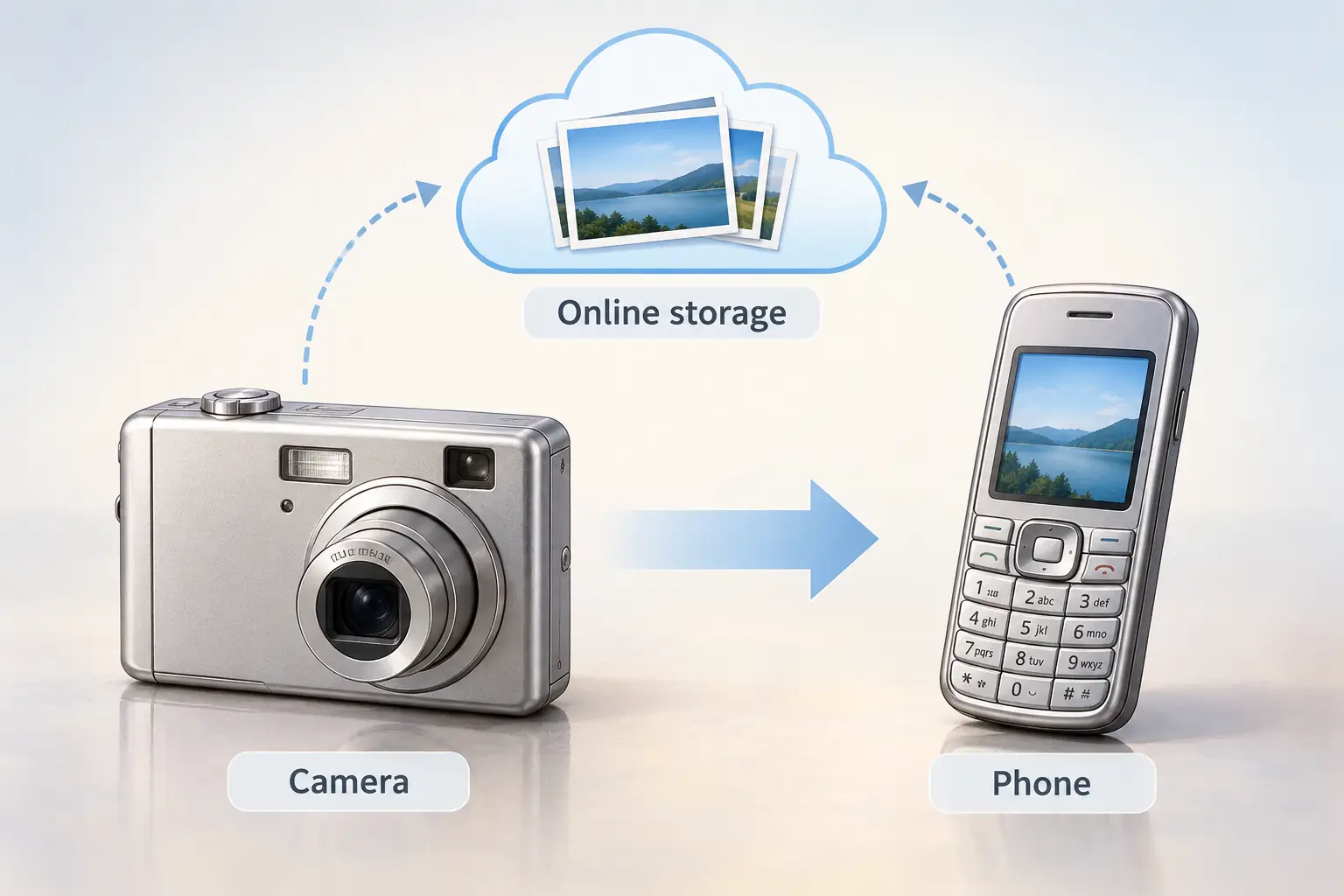
There is an unusual twist to the origin story. In a talk in Tokyo in 2013, Rubin recalled that an early Android plan had been aimed at digital cameras. The idea, as he described it, included a camera linked to online photo storage. He showed material from a 2004 pitch. The team then decided that phones offered a much bigger market.
That is Rubin’s later account, not proof that a finished Android camera system was ever sold. It is still revealing. Before the world knew Android as a phone system, the team was thinking about how portable devices could connect to services on the Internet. See the report on Rubin’s 2013 talk.
Google bought Android Inc. in 2005. At that point, an Android-branded smartphone still did not exist in stores. The purchase gave Google a team and a plan, not a ready-made best seller. A contemporary August 2005 report shows how quietly the deal entered the public record.
The timing matters. This was before Apple showed the iPhone in January 2007. Android was not created after the iPhone to copy it. Yet Apple’s phone soon changed what buyers expected from a mobile screen. Android would have to meet a moving target.
At the time, Nokia’s Symbian phones, BlackBerry devices, Microsoft’s Windows Mobile, and many simpler handsets were part of a crowded market. Some were excellent at email. Some had keyboards you could type on without looking. Many were awkward on the full web. There was no single phone experience that every maker could share.
November 2007: A Phone Announcement Without a Phone
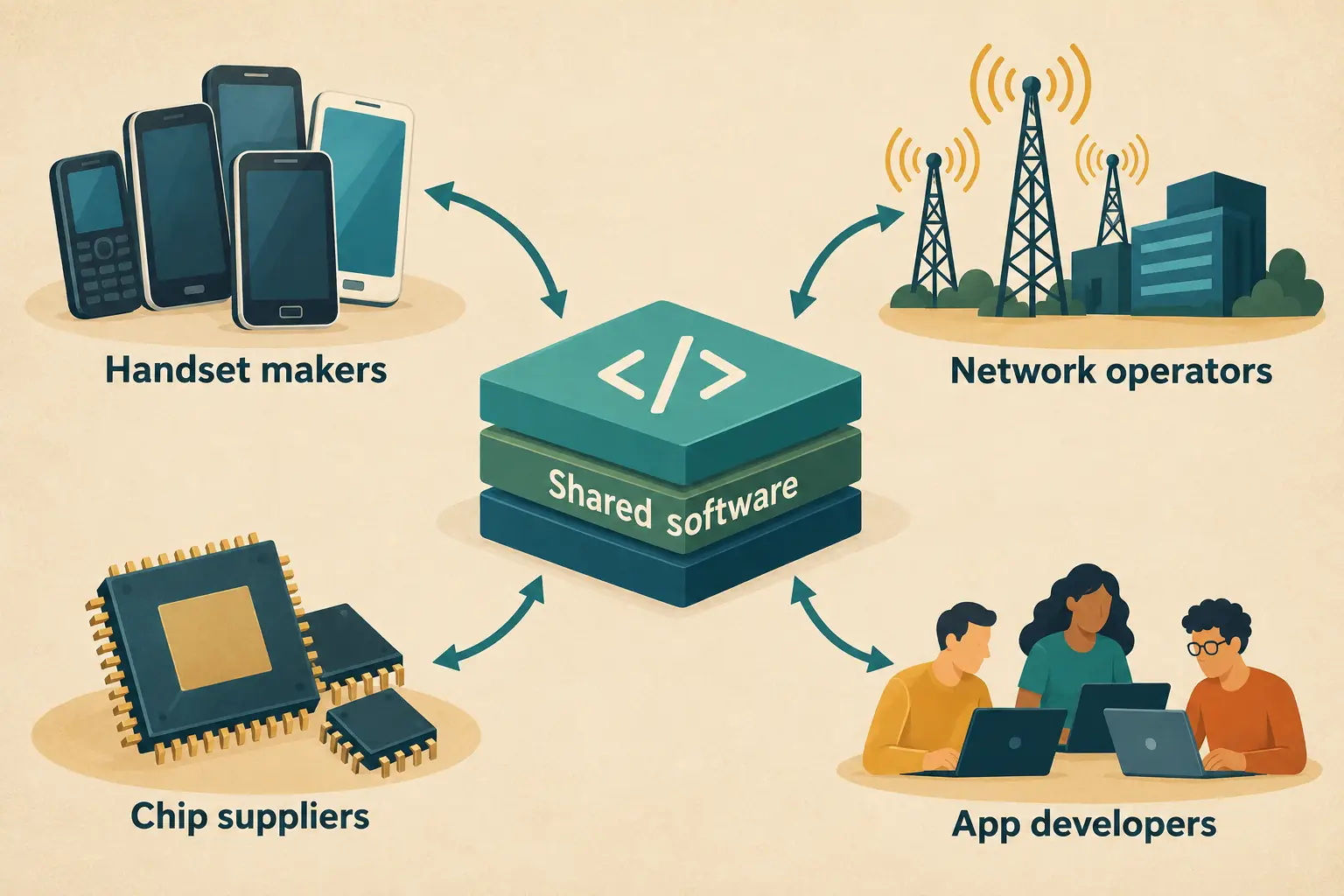
When Google finally made its move, it did not stand on a stage holding one new model. On November 5, 2007, Google and its partners announced Android and the Open Handset Alliance. The group included mobile carriers, chip companies, handset makers, and software firms.
The original alliance announcement named companies such as HTC, T-Mobile, Qualcomm, and Motorola. Their jobs were different. One would make handsets. Another would run the network. Others would make chips or supply important parts of the software.
The pitch was simple: instead of each phone maker building a whole software world from scratch, they could start from a common base and build their own products on top.
Behind the Scenes: The Device Google Did Not Show
Rubin’s November 5 blog post responded directly to talk of a Google-branded “Gphone.” He said the alliance and Android mattered more than one handset. That choice became the heart of the project: Google’s plan needed other companies to succeed, not just Google itself.
It also meant the public had to wait. There was no Android phone on sale that day. The promise came before the hardware.
Just a week later, on November 12, 2007, the alliance released an early Android software development kit, or SDK. It gave programmers tools to begin making applications before customers could buy a device. The SDK announcement described software based on the Linux kernel, with a user interface, phone functions, and a way for apps to use them.
For a developer, this was like receiving the plans for a new kind of kitchen before the building opened. You could learn where things belonged and start testing recipes. But you still could not invite a customer in.
The First Android Phone Took Nearly Another Year
The next dates are easy to mix up, so they deserve separate places on the calendar.
- November 5, 2007: Android and the Open Handset Alliance were publicly announced.
- November 12, 2007: An early developer kit became available.
- September 23, 2008: T-Mobile, HTC, and Google unveiled the T-Mobile G1, also known as the HTC Dream.
- October 21, 2008: The Android source code was publicly released.
- October 22, 2008: The first commercial Android phone went on sale in the United States.
So Android’s public announcement belongs to 2007. Its first commercial handset belongs to 2008. And the company behind that phone was HTC, selling it through T-Mobile. It was not a Google-built Pixel, a product line that came much later.
The September 23 G1 unveiling showed the actual device. The October 22 retail release confirmed that customers could now buy it. An early product announcement and a retail launch were two different events, even though press reports sometimes called both a “launch.”
In the United States, the advertised starting price was $179 with a two-year T-Mobile contract. A required voice and data plan raised the true cost of ownership. Contemporary reviews listed data plans starting at $25 a month, on top of the voice plan. The price tag was just the first part of the bill.
The G1 Had a Touchscreen. It Also Had a Trackball.
Today’s Android phone is often a flat slab of glass. The first one was much more of a compromise.
The G1 had a touchscreen, but it also opened sideways to reveal a full physical keyboard. Under the screen sat a little trackball for moving around menus. Its chin curved below the display. It looked as though a pocket computer, a mobile phone, and a BlackBerry had all been invited to the same design meeting.
That mixture made sense in 2008. A real keyboard helped with messages and email. The trackball helped with menus and links. Touchscreens were becoming important, but no one yet knew that almost every future smartphone would be built around a large glass screen with no keyboard.
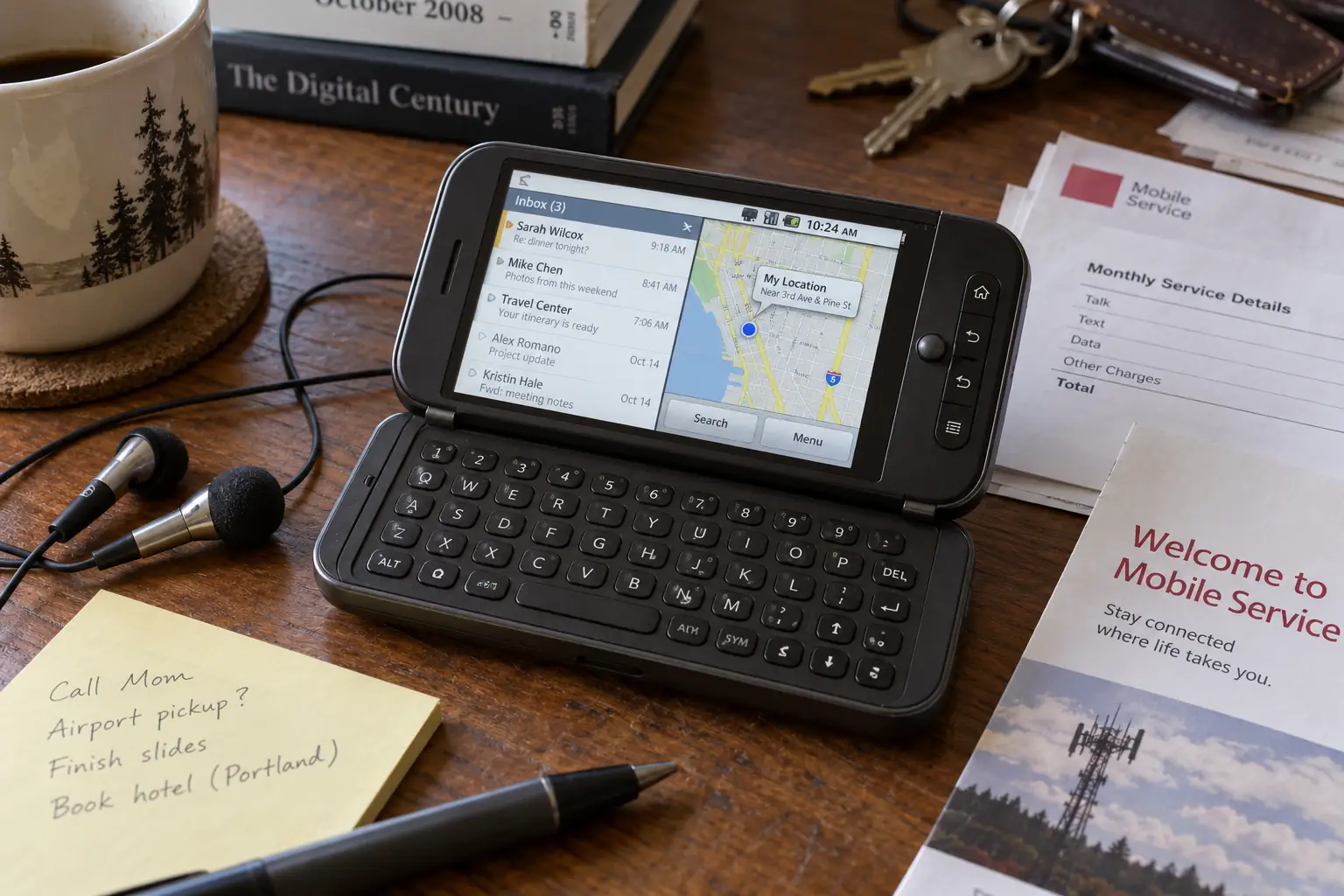
On a G1, the appeal was easy to understand. You could read Gmail, open web pages, see your position in Google Maps, watch YouTube, take photographs, and try new programs from Android Market. The idea of adding apps after buying a phone was becoming central to smartphones, and Android made that possible across different makers’ devices.
But do not mistake the promise for a perfect first version. In an October 2008 hands-on review, Ars Technica found the phone slow in some tasks and its browser frustrating. The reviewer had to open the physical keyboard for text input and found the early app store thin. He also noted the missing standard headphone jack and lack of the iPhone-style pinch gesture in the browser.
The G1 could feel clever one moment and unfinished the next. The browser brought the open web into your pocket, yet some pages looked wrong or loaded slowly. Maps could find your position, but typing a long message meant flipping the keyboard out again. An owner had a new kind of freedom, with a few new ways to grumble.
Remember the Slider?
The keyboard was not just decoration. For many people moving from BlackBerry or Sidekick-style phones, feeling actual keys under their thumbs was reassuring. The earliest Android design kept one foot in the old phone world while trying to reach the new one.
Why the Big Idea Was Bigger Than the G1
The G1 alone was not likely to take over the phone business. The software model behind it had a better chance.
For phone makers, Android offered a starting point. They could spend more effort on screens, cameras, batteries, design, and how their devices felt. They did not each need to invent a fresh operating system and persuade every app developer to support it.
For carriers, Android meant the possibility of new smartphones that did not depend on a single hardware supplier. For programmers, it offered the hope that one app could reach users of several brands. In practice, screen sizes, hardware features, and Android versions still required testing. The promise was a common target, not a guarantee that all phones would behave alike.
Google had a reason to care, too. More capable web phones could put search, maps, video, and other online services into more pockets. The company did not have to sell all those pockets a phone of its own.
In November 2009, the Motorola Droid arrived on Verizon in the United States, using Android 2.0. It gave Android a high-profile place at a second major U.S. carrier. A period report on the Droid recorded the launch and the new Google Maps Navigation feature.
Then came more brands and more styles. Samsung’s Galaxy S reached markets in 2010. Samsung announced that more than 100 operators had chosen the model for their lineups, with sales starting in Europe and wider rollouts planned. Its June 2010 release showed what the shared platform could do for a manufacturer with its own screens, distribution, and design goals.
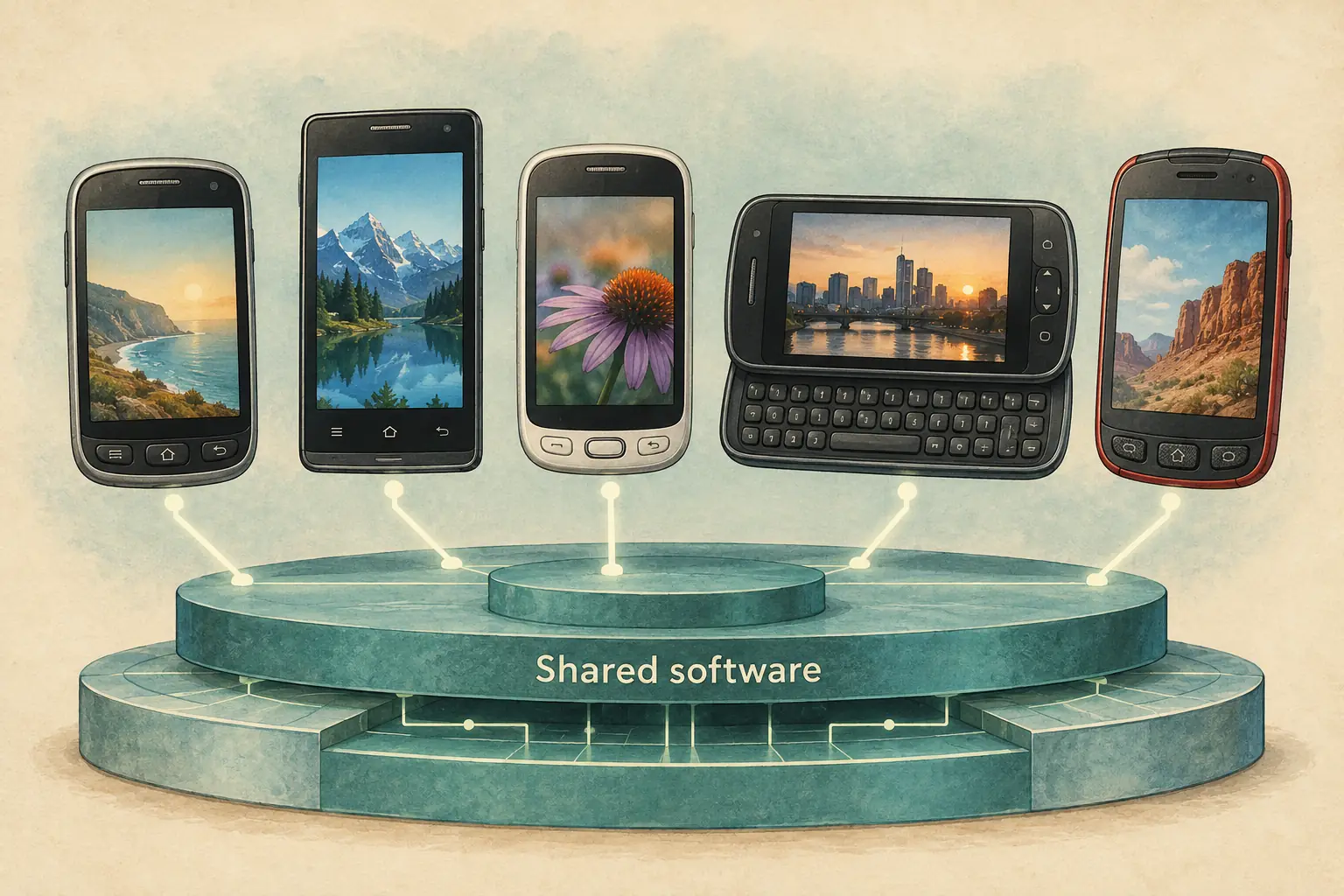
The numbers soon showed how large that change had become. According to IDC figures published in 2013, Android accounted for 68.8% of smartphones shipped worldwide in 2012, compared with 49.2% in 2011. These were shares of new phone shipments, not a claim that the same percentage of all people owned Android phones. The contemporary IDC summary makes the distinction clear.
The rise was not one inventor defeating every other phone maker. It was many phone makers adopting a shared base while competing hard with each other. Android was both the common ground and the place where the fighting happened.
Android Was Open. Not Everything on an Android Phone Was.
Android’s early promise depended heavily on one word: open.
On October 21, 2008, the day before the first G1 went on sale, Google and its partners released Android’s source code. That was a real step, not just a slogan. Developers and device makers could examine and adapt a large part of the system. Google’s 2008 source-code announcement marked the event.
Most of the Android Open Source Project, known as AOSP, uses the Apache 2.0 license. The Linux kernel has its own open-source license. This helped companies use Android in products without writing every part themselves. The AOSP’s official FAQ explains Google’s reasons for that choice.
But an open Android base does not mean that everything on a phone is open source or free of conditions. Google Play, Gmail, and other Google Mobile Services are separate from AOSP. Manufacturers seeking those services need a license from Google. Android’s Google Mobile Services explanation says so directly.
Legend vs. the Record: “Android Was Completely Free”
The easy story: Google gave away one complete phone system, including all the familiar Google apps, with no conditions.
The record: Much of Android’s core code was open source, but Google’s commercial app package was separate. Makers also paid to design hardware, test devices, support customers, and meet any license or carrier requirements. Open code did not make building a phone cost nothing.
Compatibility brought another trade-off. One company might add a new camera feature. Another might change the home screen. A third might take longer to deliver an Android update. That freedom gave shoppers more choice, but it could also leave users with different experiences and app behavior.
Google later built compatibility rules and tests to make sure ordinary Android apps could run across devices. Its developer compatibility guide describes the problem: sharing the name Android is not by itself enough to guarantee that every program will work.
The Phone Software That Outgrew Its First Phone
The software grew while its first physical shape disappeared. The G1’s little trackball did not become a standard smartphone feature. Slider keyboards faded from most new models. Touchscreens grew, and software keyboards became ordinary. Android changed with them.
Android Market changed too. In March 2012, Google folded it into a wider service called Google Play. Apps were now part of a growing world of games, books, video, and other media. The original Google Play announcement shows how far the idea had moved from that thin little G1 store.
Android also spread beyond ordinary handsets, finding related uses in tablets, televisions, watches, cars, and other connected devices. Not every one of these uses runs the same software, supports the same apps, or includes the same Google services. The shared family matters more than the label on the box.
Its troubles grew along with its reach: uneven updates between makers, concerns about data collection, extra software bundled by brands, and the pressure of keeping a common platform working across countless devices. Those are not proof that the original idea failed. They are the costs of having a platform shared by many companies and used for so many jobs.
The most telling part of Android’s history is still that first strange announcement. In 2007, Google could have made the whole story about a phone with its own name on the back. Rubin instead pointed to a set of tools other companies could build upon.
On October 22, 2008, shoppers finally got a phone they could hold. It had a keyboard, a trackball, and enough rough edges to fill a review. But the larger invention was not hidden inside that one HTC handset. It was the idea that the next phone, and the one after that, could come from somebody else.
Sources and Further Reading
- Andy Rubin’s November 2007 blog post — the original statement that Google was announcing a platform rather than a Gphone.
- Open Handset Alliance, November 5, 2007 — participating companies and the first public Android pitch.
- Android developer-kit announcement — what developers received on November 12, 2007.
- T-Mobile’s September 2008 unveiling and October retail announcement — separate hardware announcement and first commercial sales.
- Ars Technica’s October 2008 review — a period account of G1 hardware, setup, everyday use, and weaknesses.
- Android open-source release, October 2008 — the date Android’s source code was published.
- AOSP FAQ and Google Mobile Services guide — how the open base differs from Google’s licensed apps and services.
- Rubin’s camera-origin recollection — a 2013 report of what he said about the startup’s early thinking.
- IDC 2012 smartphone shipment figures — historical market share with the measured period and basis.