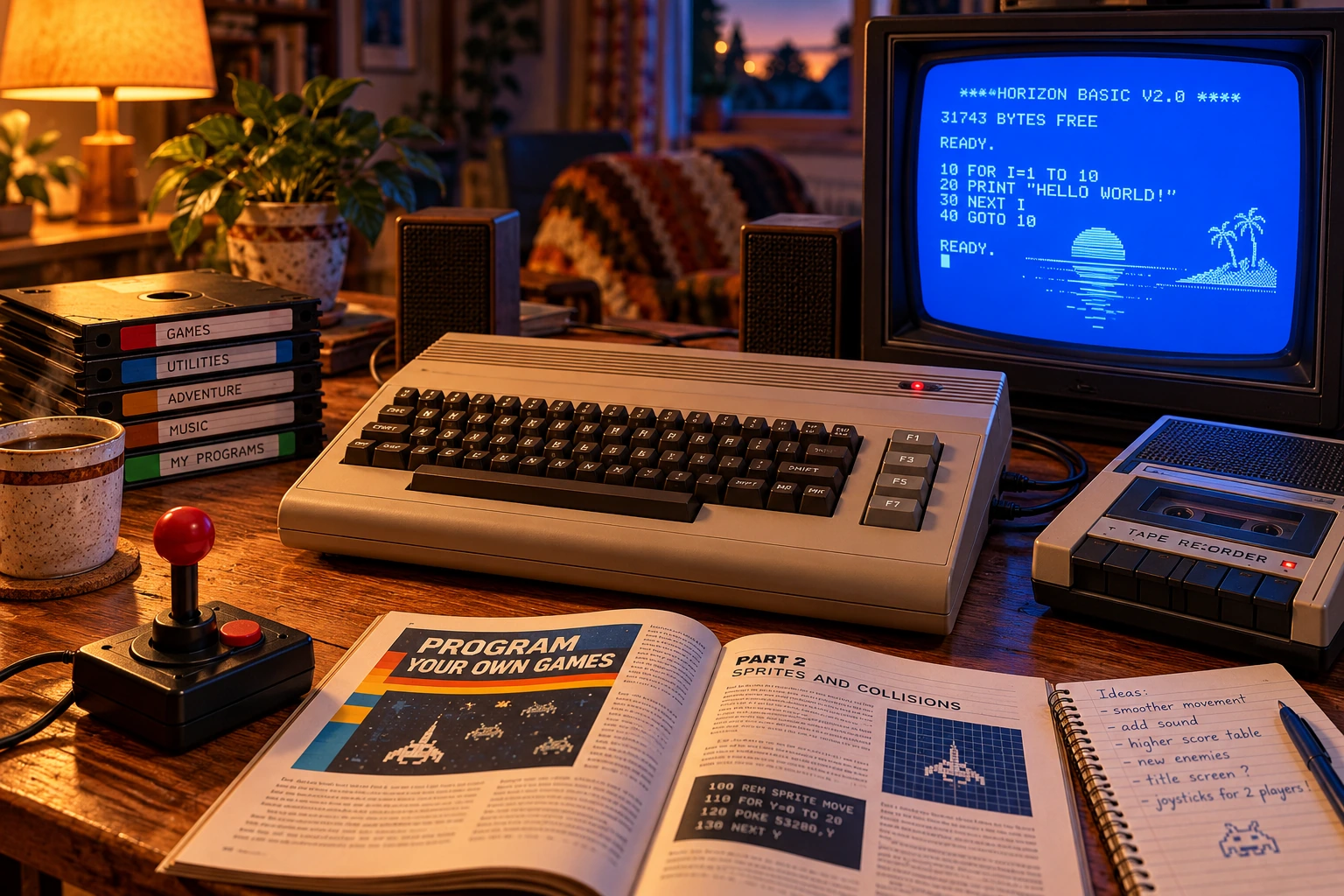
The Commodore 64 was almost a different machine. Its two most famous chips were first designed for a new video game system, not a home computer. Then Commodore’s boss, Jack Tramiel, changed the plan. The engineers had only weeks to make something they could show in Las Vegas.
They did it. Five prototypes were ready for the January 1982 Consumer Electronics Show. By August, machines were shipping to stores. The starting price was $595 in the United States. What followed was not just a hit computer, but a remarkably stubborn one.
It sat under family televisions, swallowed cassette tapes, drove chunky floppy disks, and made music that people still recognize. It helped children write their first programs and adults print their first documents. Years after newer computers had arrived, the C64 was still finding new work.
Two Chips, Then a Computer
In 1981, engineers at MOS Technology, a Commodore-owned chip maker in Pennsylvania, began work on new video and sound hardware. Albert Charpentier led the video work. Robert Yannes designed the sound chip. Their goal was strong game hardware that another company might buy.
Instead, Commodore decided to make its own computer. Charpentier later recalled a choice between 16K and 64K of memory. Tramiel chose the bigger number, betting that memory prices would fall. That choice became the machine’s name.
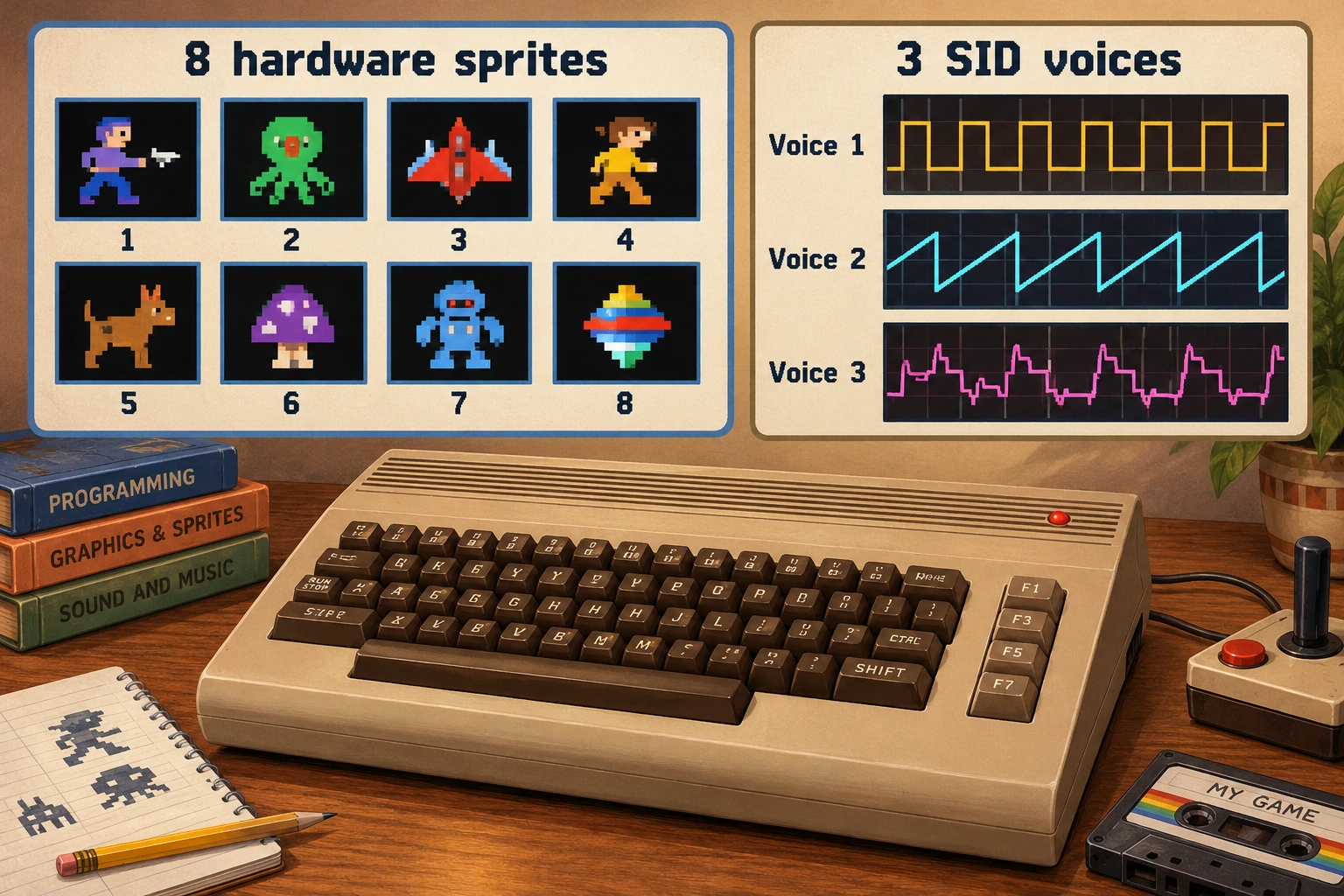
The team saved time in a very practical way: it reused much of the earlier VIC-20 computer’s case design. The C64 looked familiar before anyone turned it on. Inside, though, it had a 6510 processor, 64 kilobytes of memory, and the new custom chips. Its color video chip, called VIC-II, could handle eight movable graphic objects, or sprites. Its SID sound chip had three independent musical voices.
Behind the Scenes: Five Prototypes in a Hurry
The unusually fast design was not just a legend told at computer clubs. In a detailed March 1985 IEEE Spectrum engineering history, team members described making five working computers in less than five weeks. The article also reported an initial manufacturing-cost target of $130 per machine, with an actual early figure of about $135. That was a manufacturing estimate, not the store price.
There was a human price to moving fast. The engineers also recalled design compromises, factory problems, and arguments about what could be changed once orders began arriving.
The C64 was shown in January 1982, but that did not mean families could buy one that day. Volume shipments began in August. This difference matters: the famous launch story happened months before the machine became an ordinary item in shops.
What Came Home in the Box?
The first thing buyers noticed was its shape. Most of the computer lived inside a thick, brown-beige keyboard. There was no separate tower. The power switch and joystick sockets were on the side; the connections for a television, storage and other gear sat around the back.
A family could connect the computer to a compatible television using its RF video output. That was a major part of the bargain. A special monitor looked better, especially for reading small letters, but was not required to get started.
Turn it on and a blue screen appeared with a BASIC prompt and a blinking cursor. BASIC was a simple programming language built into the computer. No disk had to load first. For a newcomer, the computer was both a blank page and a question: what would you tell it to do?
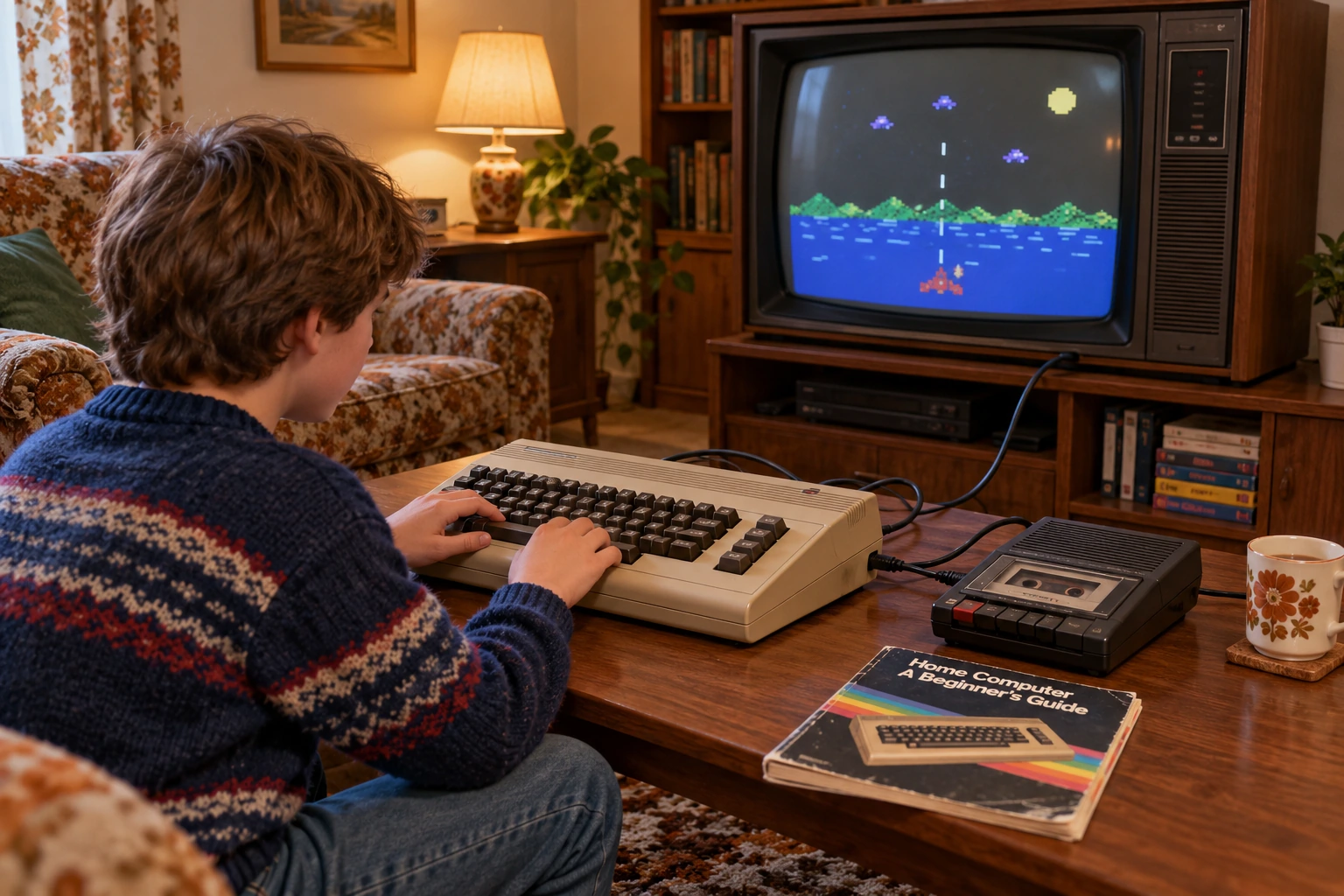
The answer might be a game cartridge, a program loaded from cassette, or several lines typed from a magazine. It might also be a half-hour spent hunting for a loose cable. Home computing made people their own setup crew.
The Real Cost: Not Just $595
That $595 American launch price bought the computer, not a complete office. Buyers who wanted to save their work needed storage. Many chose a Commodore Datassette, which used ordinary-looking audio cassettes. The pricier option was a 1541 floppy drive. A joystick, printer, monitor and games could add still more.
There is a useful, dated example. In January 1983, Ron Jeffries reviewed the C64 for Creative Computing. He listed the computer at $595 and the 1541 disk drive at another $399. Together, that was $994 before software, tax, a monitor or a printer. The family television could keep the display cost at zero.
That is not a universal 1983 shopping receipt. Stores discounted products, bundles changed, and prices were falling fast. In June 1983, United Press International reported a retailer-survey price of $289 for the C64 after a rebate. The official list price was still shown as $595. A buyer who waited could save hundreds of dollars on the computer itself.
Price was also a contest. Atari’s eight-bit models and Texas Instruments’ TI-99/4A were fighting for home buyers, while Apple’s machines served a more expensive part of the market. Commodore did not simply build an attractive computer; it kept lowering the barrier to buying one. The Smithsonian’s C64 collection record also notes that it reached buyers through department stores, discount chains and toy stores, not only specialist computer dealers.
A Budget That Kept Changing
Early-1983 U.S. published list-price example: C64 ($595) + 1541 drive ($399) = $994. A dedicated monitor, printer, software and games cost extra; a household TV could stand in for a monitor. By June, some U.S. buyers could get the base machine for far less. These are historical dollar prices, not inflation-adjusted amounts.
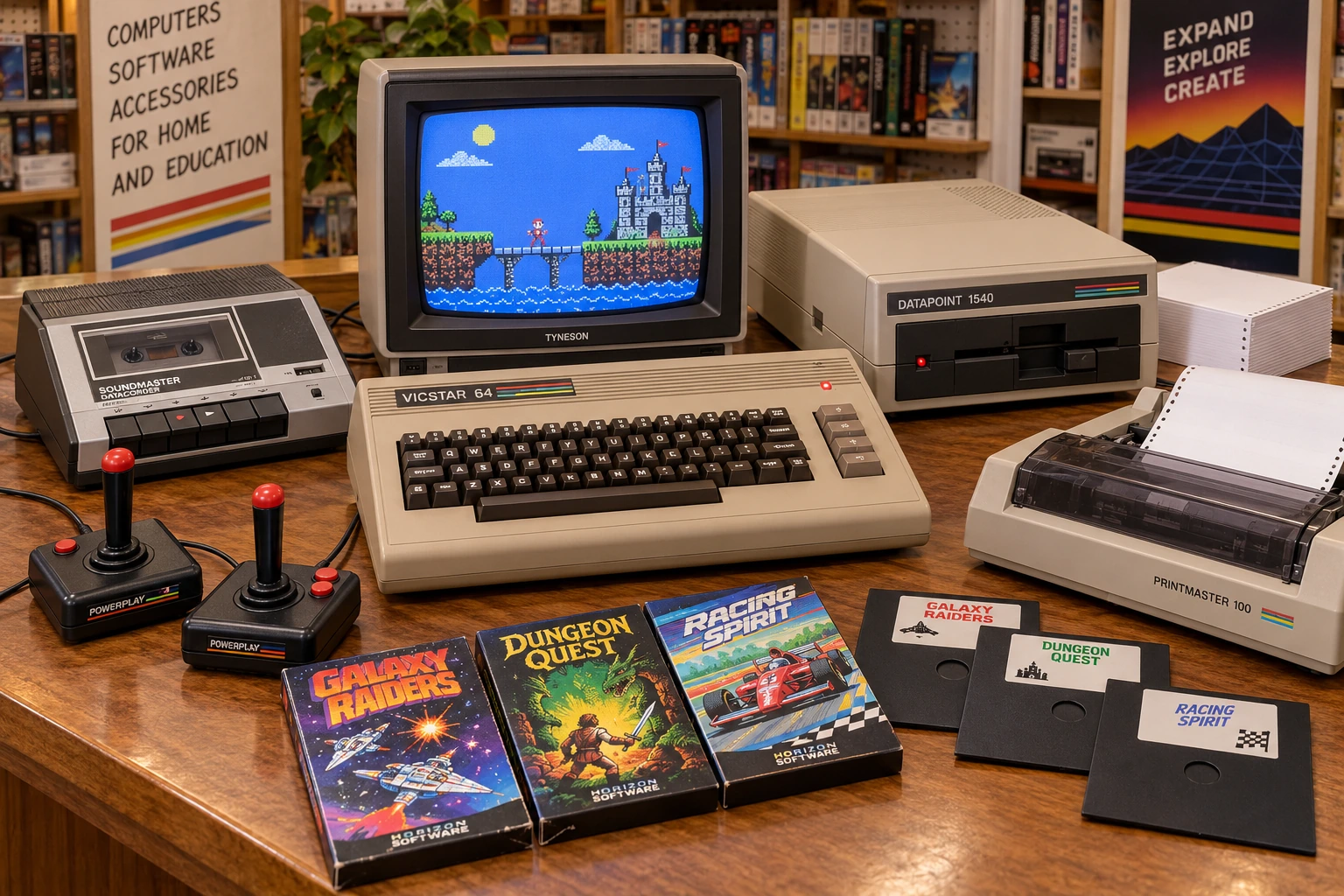
The cheaper tape route was real, but it came with patience tests. A cassette moved through a program from beginning to end. A disk drive could jump to the file it needed. It was also better for bigger programs and documents. Both forms of storage made physical sense: you could hold your work in your hand, label it, lend it, and sometimes lose it under the sofa.
Games carried their own costs, too. Some were cartridges, some came on cassette, and many later titles came on floppy disks. No one price covered every game or country. The important choice was not simply which computer to buy, but which kind of software you could afford and load.
Three Musical Voices and a Thousand Ideas
The C64 was not the first home computer with color or sound. What made it special was the combination of capable hardware and a price many households could reach, especially after the cuts.
The VIC-II could move eight hardware sprites. These were small pictures the chip could position without redrawing the whole screen in software. A game could have moving figures, a changing background and fast action with less work for the main processor. That mattered when the processor ran at about one megahertz.
Then there was SID, the Sound Interface Device. Robert Yannes designed it as more than a simple beeper. Each of its three voices could make different wave shapes, change pitch and shape the start and end of a note. Music and sound effects could have real character. The C64 was a tiny instrument as well as a computer.
Games like Impossible Mission, Summer Games, The Last Ninja and Elite showed different things that creators could do with it. Some aimed for sharp action. Others used music, exploration, clever loading tricks or a sense of scale. The machine did not make those games by itself. Artists, composers and programmers learned its odd corners and pushed hard.
People behind the screen mattered as much as the chip. Composer Rob Hubbard, for example, used SID to give games such as Monty on the Run (1985) music that could stand on its own. His later interview about the tune describes composing within the machine’s tight limits. And SID’s designer, Yannes, went on to help found Ensoniq, a maker of electronic musical instruments. The link between home-computer sound and real music-making was more than a nice metaphor.
There was a second kind of music culture, too. Owners composed new tunes, studied other people’s work and swapped their creations. The instrument did not stop being interesting when the game boxes vanished from shop shelves.
The Machine That Asked You to Type
The C64 also mattered to people who never became expert game players. Because BASIC was ready as soon as the machine switched on, a child could type a line, run it and see a result. A first program could be as plain as 10 PRINT "HELLO", followed by RUN. The lesson was simple: the machine obeyed instructions, and you could change them.
Computer magazines made this habit bigger. They printed programs for readers to enter at home. A free program could take an evening of careful typing. One wrong character could break it. Finding the mistake was another lesson, though not always a welcome one.
Writing and schoolwork were part of the story as well. A home user could run a word processor, save a letter, keep simple records or print a report. Commodore sold programs such as Easy Script. Magazine publishers also offered alternatives. One striking example was Charles Brannon’s SpeedScript, which first appeared in COMPUTE!’s Gazette in January 1984. The magazine kept improving it in later issues. In May 1987, readers were still getting a new version and the instructions to type it in.
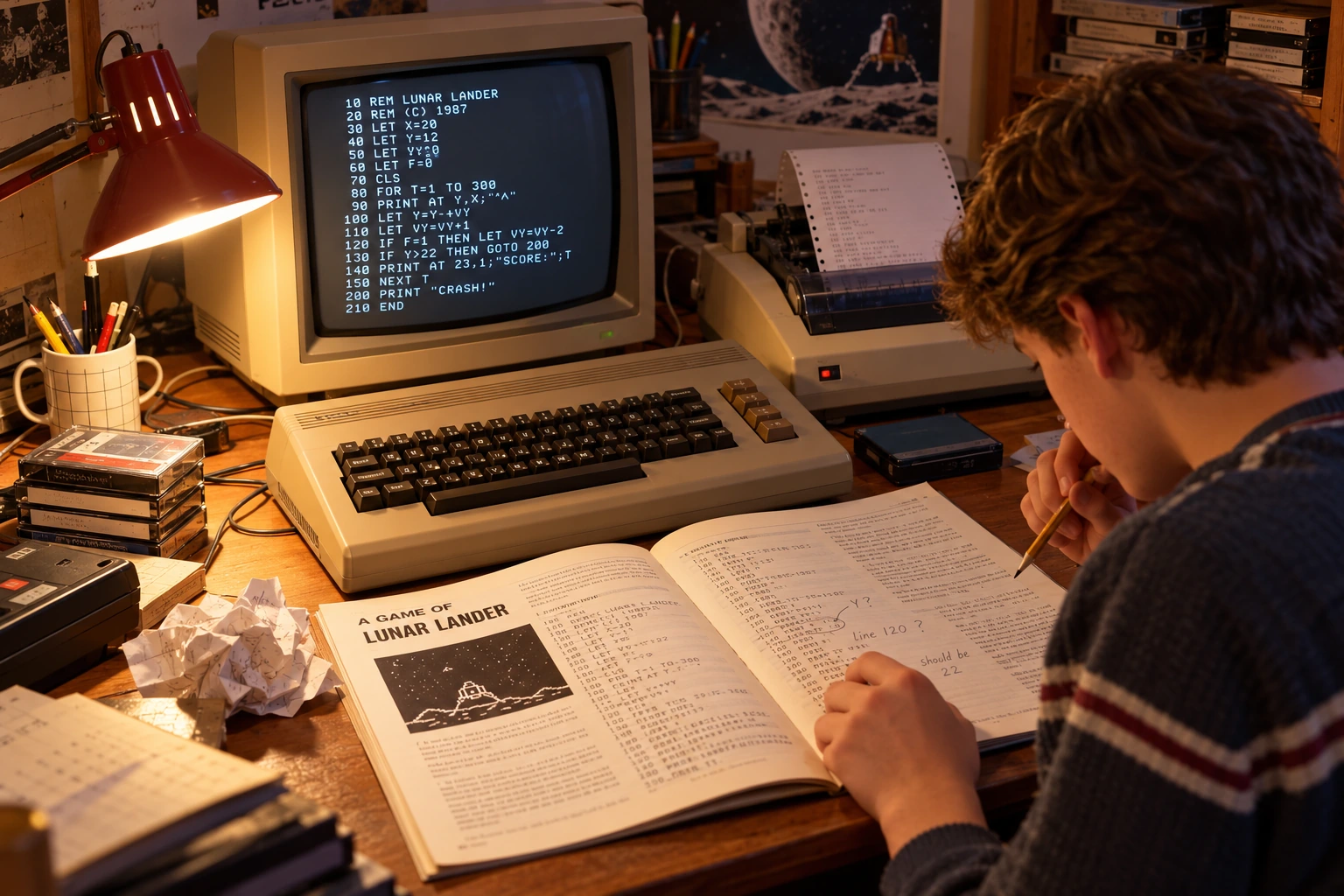
The 40-column text display was narrow for serious writing. Printing could be slow and noisy. Saving work took planning. Still, families were making real documents on a machine that also played lively games.
In 1986, Berkeley Softworks released GEOS for the C64. It gave users a graphical desktop with icons and programs such as geoWrite and geoPaint. The Centre for Computing History’s collection preserves evidence of that software. GEOS did not turn a C64 into a Macintosh. It showed how much thoughtful programming could still do on the older computer. That story deserves its own article; here it is one more reason the machine stayed useful.
The Bargain Had Rough Edges
It is easy to remember the good games and forget the chores. The C64 had very real weaknesses. Its built-in BASIC did not include simple commands for using the fancy graphics and sound chips. To reach them directly, programmers often used POKE commands that changed particular places in memory. A powerful feature could be hidden behind a wall of numbers.
The 1541 drive also became famous for the wrong kind of speed. In a mid-1980s COMPUTE! magazine account, editor Selby Bateman described the drive’s painfully slow transfers and the add-ons created to hurry it up. For someone loading a large game, waiting was annoying. For a person working with files all day, it was a serious limit.
What Went Wrong?
Old software inside new hardware: Reusing Commodore’s older BASIC saved time and money, but beginners lacked friendly commands for the chips that made the C64 exciting.
Slow disk access: The designers kept compatibility goals from the VIC-20 era. The result made disk-heavy work harder and encouraged third-party fast loaders.
Cost pressure: Engineers recalled compromises in video output, production parts and board layout. Low price helped sell the C64, but owners still lived with blurry text on some displays and uneven early quality.
Even a strong contemporary supporter could see the faults. In his January 1983 review, Jeffries praised the keyboard and sound but complained about soft-looking video characters and awkward sound and graphics programming. That is more useful history than calling the C64 perfect.
Fun Fact: The Disk Drive Had Its Own Computer
The 1541 was more than a box that spun disks. Commodore’s service specifications list a separate 6502 processor, 2K of RAM and 16K of ROM inside the drive. It had a little computer of its own, yet loading from it could still feel painfully slow.
Yet there was a strange side effect. Developers learned the faults in detail. Tools and tricks grew around them. Speed-loading software, clever graphics routines and better applications turned obstacles into problems a community could solve.
Why It Kept Going Around the World
There was no single worldwide C64 experience. In the United States, floppy drives became important for many users. In parts of Europe, cassette loading and tape-based games remained familiar much longer. TV standards, local prices, imports and software shops changed what a C64 owner’s desk looked like.
In Britain, the computer was still supporting a major magazine in the 1990s. Commodore Format began in 1990, eight years after the machine’s American launch. According to the magazine’s historical archive, it reached a circulation of about 60,000 copies a month in the first half of 1992. Readers were still paying for articles, reviews and a cassette packed with software when many people elsewhere had moved to newer machines.
Germany also had a strong Commodore publishing and user culture. In Turkey, local magazine archives record issues of 64’ler starting in April 1988 and continuing into the 1990s. A Turkish collector’s list of surviving issues is a useful reminder that the machine’s story was not written only in English.
Those different clocks explain part of the long life. The C64 was not replaced everywhere at once. A machine that seemed old news in one shop could still have fresh software, useful lessons and devoted readers in another country.
And once millions of families owned a computer, publishers had a reason to keep selling programs for it. Friends could trade tips, programmers already knew the hardware, and a new buyer could find help from an older owner. Popularity fed more popularity. The installed base mattered long after the first advertising campaign.
The Computer After the Company
New machines eventually won the everyday market. The Commodore 128 offered a newer path while retaining a C64 mode. Commodore’s own Amiga line brought a different level of graphics and computing power. IBM-compatible PCs and game consoles kept growing stronger. A 40-column, one-megahertz home computer could not remain the obvious choice for everything.
Still, the C64 stayed on sale into the early 1990s. Sources differ over whether to mark the end of production in 1993 or at Commodore’s collapse in 1994. The company entered liquidation in April 1994. Its computer had already enjoyed a working life far longer than most buyers in 1982 could have expected.
Legend vs. the Record: How Many Were Sold?
The C64 is widely called the best-selling single computer model of its era. The exact total, however, is not settled. Guinness World Records explains why figures differ: around 12.5 million in one modern estimate, roughly 17 million in a Commodore estimate, and higher claims made later. It is safer to say many millions than to pretend that one impressive number is certain.
The most unusual part came later. Owners kept restoring old boards, making new music and writing new code. Some people treated the restrictions as the point. How much could you make from three sound channels, a small pool of memory and a screen with tight limits?
As of October 2026, this is not merely a memory. The High Voltage SID Collection reported in June 2026 that its archive had passed 61,000 SID tunes. The C64 graphics competition index lists events and entries during 2026. These are community records, not proof that every original C64 still works. They do show that people continue creating for the machine.
Can you still try one?
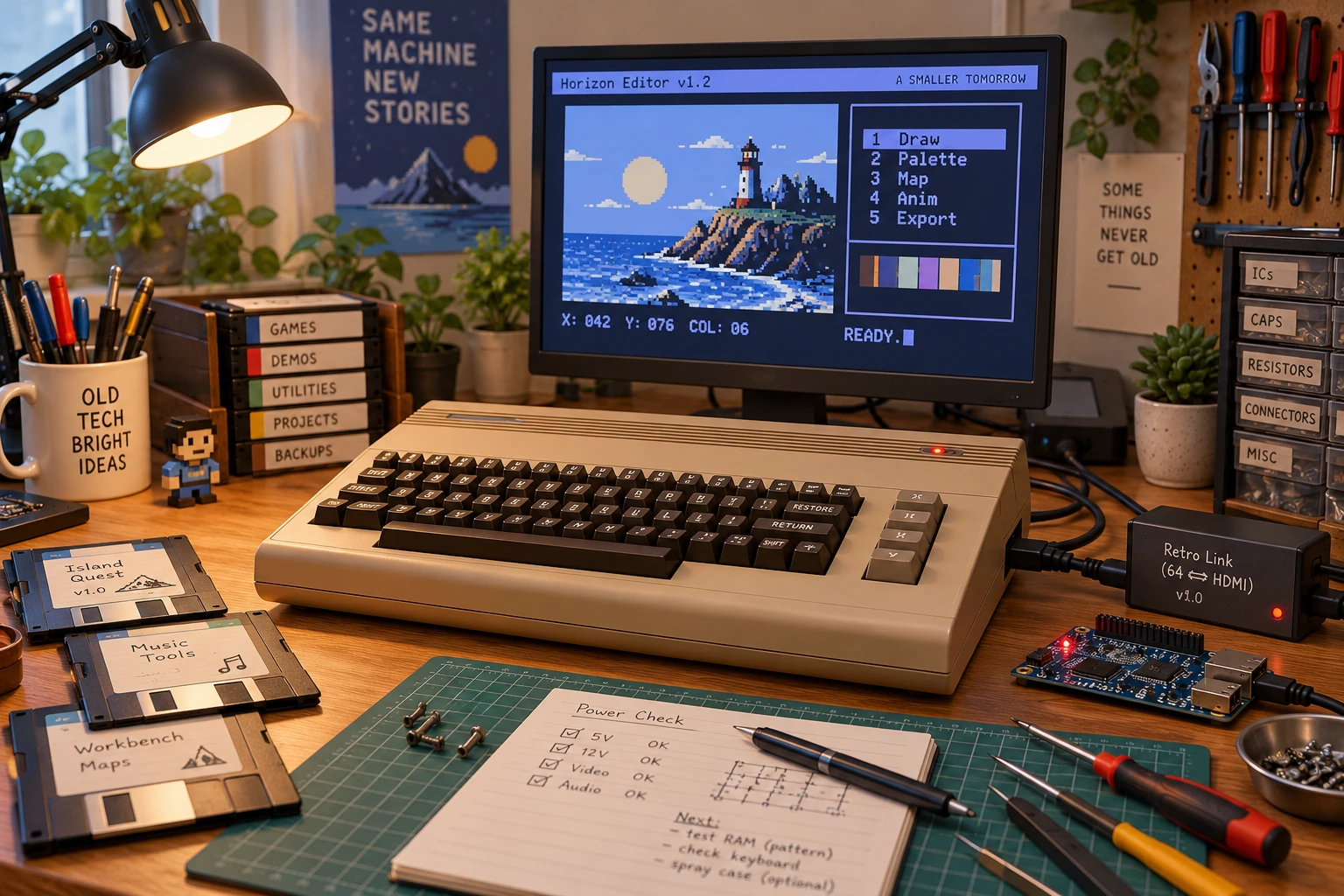
Yes, though the safest route for many newcomers is software emulation. The open-source VICE project still maintains a Commodore emulator; its official site listed version 3.10 in its December 2025 news. Emulation can reproduce much of the programming and hardware behavior, but it does not automatically grant rights to old commercial games or applications. Use software you are entitled to use.
Real hardware is different. It has cables, aging parts and power supplies. The C64 repair community warns that some original supplies can fail in ways that damage the computer. A collector should have the supply assessed or use a properly specified modern replacement before switching on an unknown machine. Repairs that expose mains voltage belong with qualified people.
The Reason It Wouldn’t Quit
The Commodore 64 lasted because several things happened together. Its price fell sharply. Its sound and graphics gave creators room to experiment. People could program it the moment they turned it on. Games made it fun, but writing tools and school projects made it useful. Magazines, friends and user groups gave owners reasons to keep learning.
It also lasted because the machine became familiar. Once you knew how to load your favorite disk, fix a BASIC line, connect the printer and get the television picture just right, you had built a little world around it. New hardware had to offer something worth giving that world up for.
The C64 began as a fast decision about two chips and the cost of memory. Decades later, its limits are still inviting people to make things. For a computer designed in a hurry, that is a remarkably long second act.
Sources and Further Reading
- IEEE Spectrum, “Design Case History: The Commodore 64” (March 1985) — detailed, contemporary interviews with the engineers, including the schedule, chip design, manufacturing choices and disk-drive problems.
- Creative Computing, Ron Jeffries (January 1983) — an early hands-on review with list prices, praise and criticism.
- COMPUTE!, Selby Bateman, “Beyond the 1541” — a period look at tape, floppy storage, actual loading limits and third-party fixes.
- Smithsonian, Commodore 64 collection record — museum description of the machine, original price and retail distribution.
- COMPUTE!’s Gazette, SpeedScript 3.2 (May 1987) — original evidence that users still typed in and improved useful home software.
- Commodore Format Archive, magazine history — the 1990s British reader community and its continuing cassette culture.
- Guinness World Records, C64 sales record — explains the uncertainty in reported lifetime totals.
- VICE official project site — present-day emulation status checked on October 24, 2026.
- Retro Gamer, Rob Hubbard interview on Monty on the Run — later first-person account of the music for a well-known C64 game.