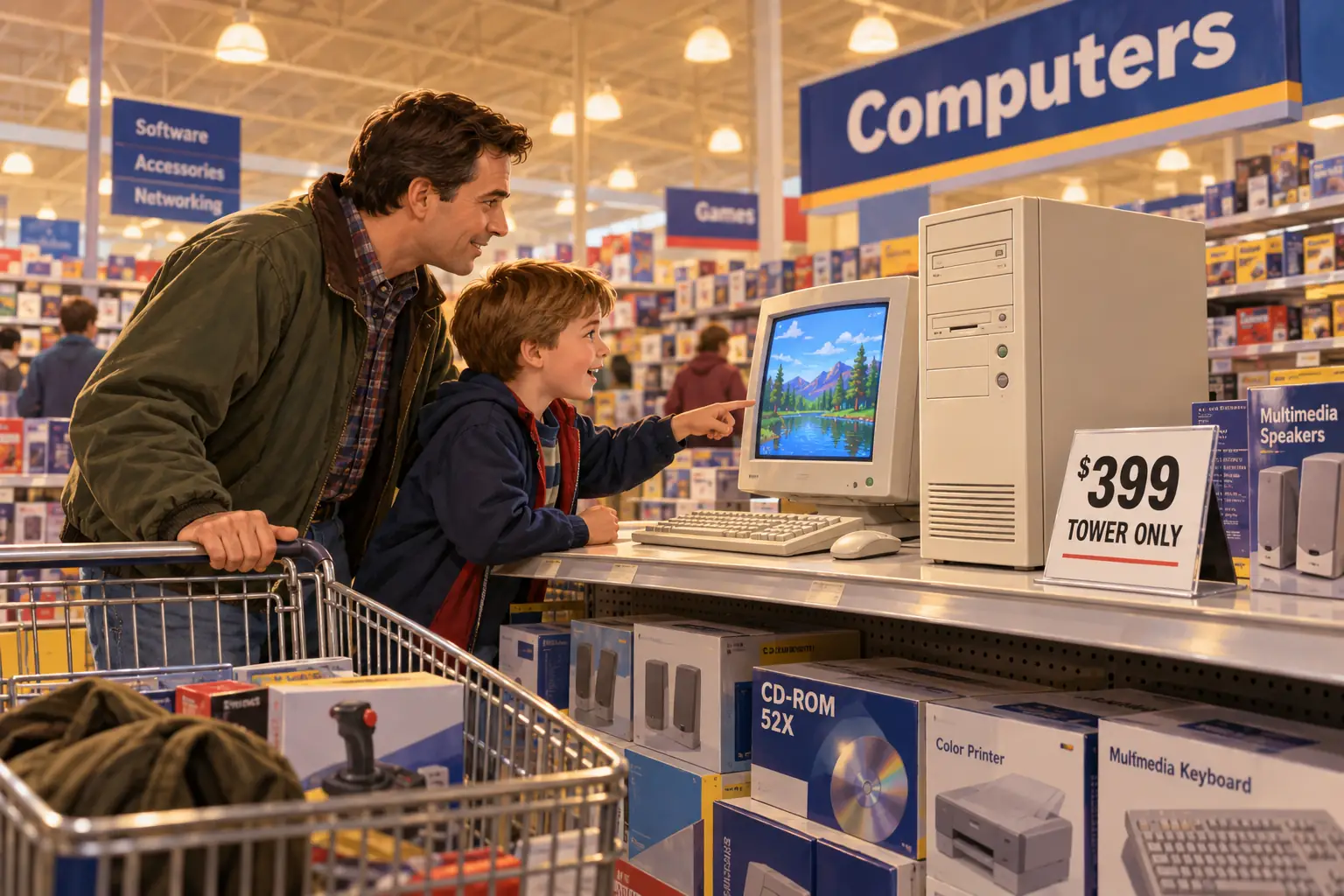
In October 1998, a new PC company made a promise that could stop a shopper in the electronics aisle: a Windows computer for $399. The catch was simple. That price did not include the monitor.
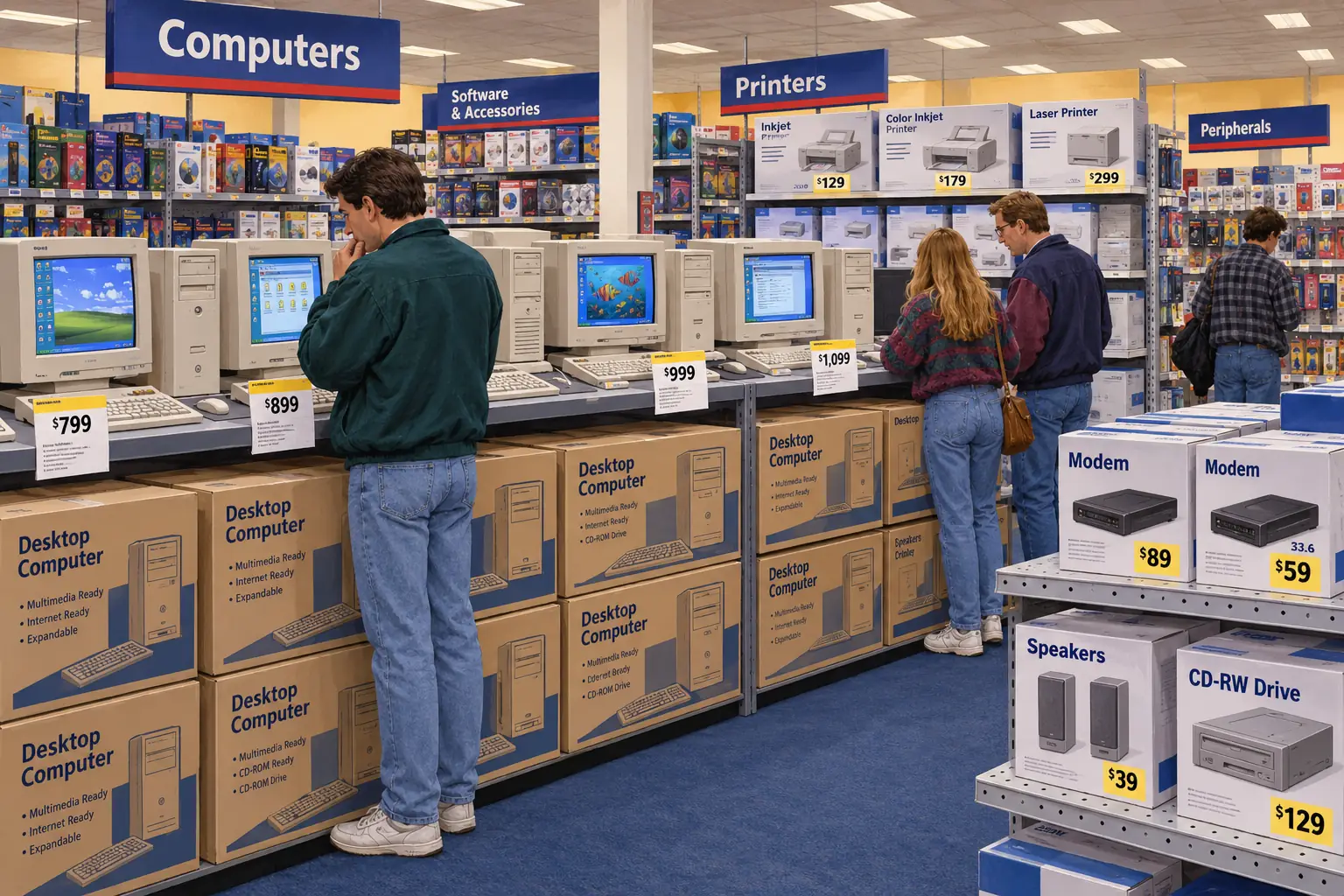
For $499, however, eMachines planned to sell the complete package, screen and all. At a time when many well-known brands still wanted roughly twice that much for a basic home PC, the difference was hard to ignore. In a contemporary San Francisco Chronicle report, chief executive Stephen Dukker described $500 as the key price for reaching a new wave of home buyers.
That was the appeal of eMachines. It was not selling the world’s fastest computer. It was saying that a family did not need to spend a fortune just to get online, finish homework, or type a letter. But the sticker price was only the beginning of the story. Someone still had to pay for the parts, the store shelf, the returned machines, and the voice at the other end of the support phone.
The $500 Door Into Computing
eMachines was formed in September 1998 as a venture involving the South Korean computer firms TriGem Computer and Korea Data Systems. Lap Shun “John” Hui, who was linked to the monitor maker KDS, was among its founders. Dukker led the young business. Its early focus was the United States, especially ordinary shoppers visiting big electronics stores.
The first pitch was easy to understand. An eTower 266 would use a 266 MHz Cyrix processor, 32 MB of memory, a 2.1 GB hard drive, a CD-ROM drive, and a 56K dial-up modem. It was a modest machine for its day, but it had the parts a new computer owner might expect to use right away. The planned price was $499 with a 14-inch monitor, or $399 without one.
The prices were announced before the machines had become a fixture in homes. Reports from October 1998 described planned sales; shipments began later that year. This was a US retail story first, not proof that every country could buy an eTower for the same price.
Why was the price so powerful? In the late 1990s, a computer could mean a large family purchase. It might also mean paying for a desk, a printer, disks, software, and monthly internet access. A lower starting price made the decision feel possible, even if the rest of the costs were still waiting.
What Could a $399 Computer Actually Do?
A useful answer came from someone who tried one. In April 1999, technology writer Lawrence J. Magid tested the eTower 300K for the Los Angeles Times. His machine had a 300 MHz AMD K6-2 processor, 32 MB of RAM, a 2.1 GB hard drive, an ATI graphics card, a floppy drive, CD-ROM drive, and modem. Windows 98 and Microsoft Works were part of the deal.
That meant a family could type school papers, build a simple household budget, make a calendar, and explore the web over a telephone line. The modem was not fast by later standards, and 32 MB of memory could become cramped. But the computer was not an empty case sold to meet a price target.
Magid even wrote his review on the eTower. For ordinary word processing, he found little practical difference from the more expensive PC he normally used. That did not make the budget machine just as fast in every task. It showed something more useful: the least expensive tool can be plenty fast for the work in front of it.
There were limits. Microsoft Works was a handy starter bundle, but it was not the same as getting every full office program. A keen gamer or someone editing large images would ask more of the processor, memory, and graphics hardware. Buyers had to compare the whole package, not just the number printed on a sale tag.
The $399 Math
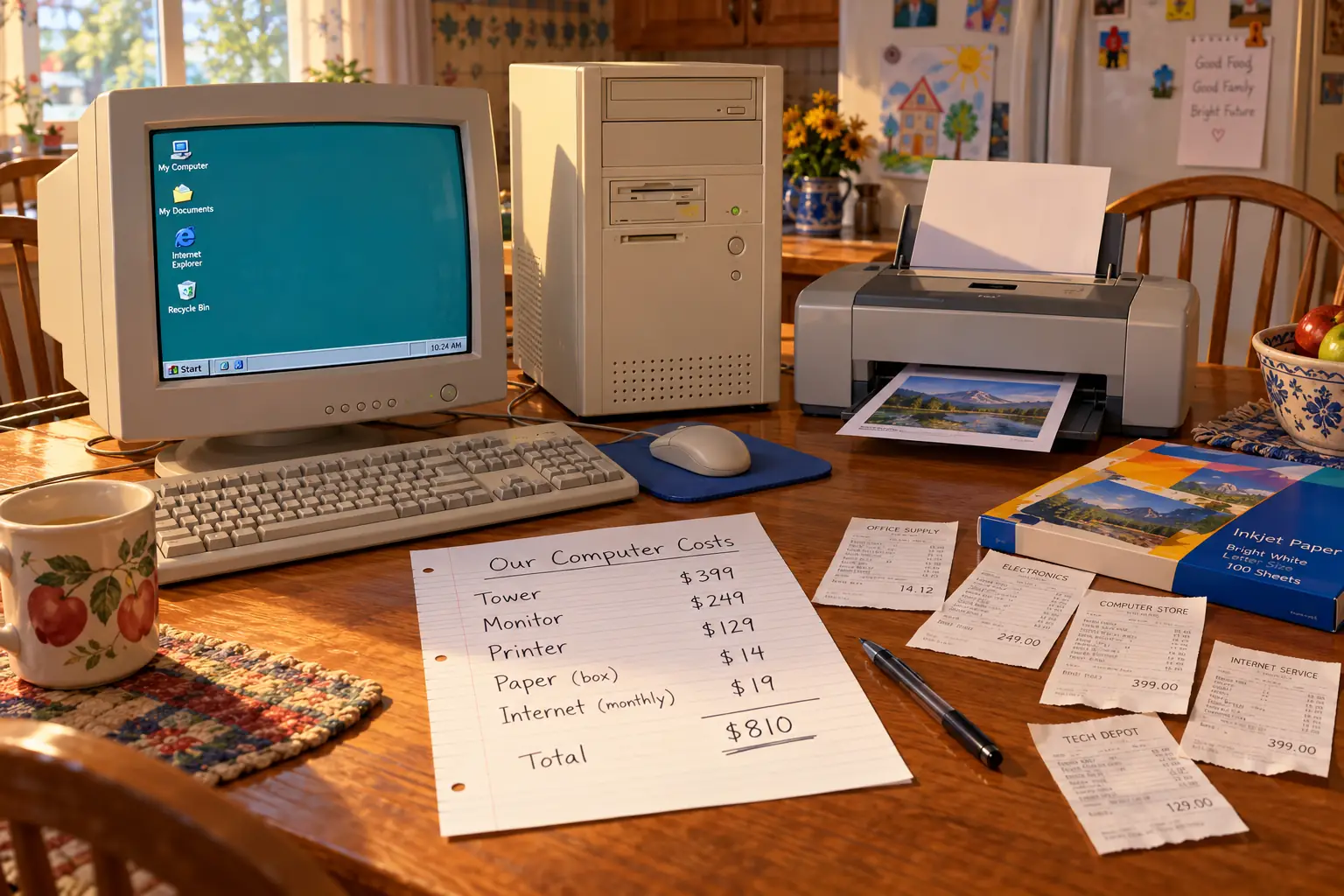
In that 1999 review, Magid listed eMachines monitors at $99 for 14 inches, $139 for 15 inches, and $225 for 17 inches. He estimated that adding a printer, tax, shipping, and other needs could push a $399 purchase to $800 or more. His price check is a reminder: a cheap tower was not always a cheap complete desk.
Built for the Store Shelf
eMachines did not try to win by making every part in its own factory. It put together a business around low costs, outside suppliers, and high sales volume. Much of its design, manufacturing, customer service, and technical support work was contracted out.
That detail comes from an unusual source: a 2004 Delaware Court of Chancery opinion about the value of eMachines shares. The court described a business that, in some ways, looked more like a wholesaler connecting overseas makers to American buyers than like a traditional PC manufacturer. It is a rare look behind a very ordinary-looking beige box.
The store was just as important as the computer. A shopper at Best Buy or another chain could see a low price beside more costly brands. The store already had the foot traffic, display space, and sales staff. That was different from Dell’s direct-to-customer model, where the buyer ordered a machine to be delivered later.
The model grew fast. In September 1999, the Los Angeles Times reported that eMachines had sold one million PCs since shipments began the previous November. According to the same report, nearly one in nine PCs sold through US retail stores at that moment carried its name. Those are dated retail figures, not a claim about the whole world or every type of computer.
Fast-moving stock mattered. A PC sitting on a shelf for months might lose value as newer chips and bigger hard drives appeared. A cheaper computer that sold quickly could be better for a retailer than a fancy one that sat waiting for a buyer. The risk was that low prices left little room for mistakes.
Could You Upgrade It? And Who Answered the Phone?
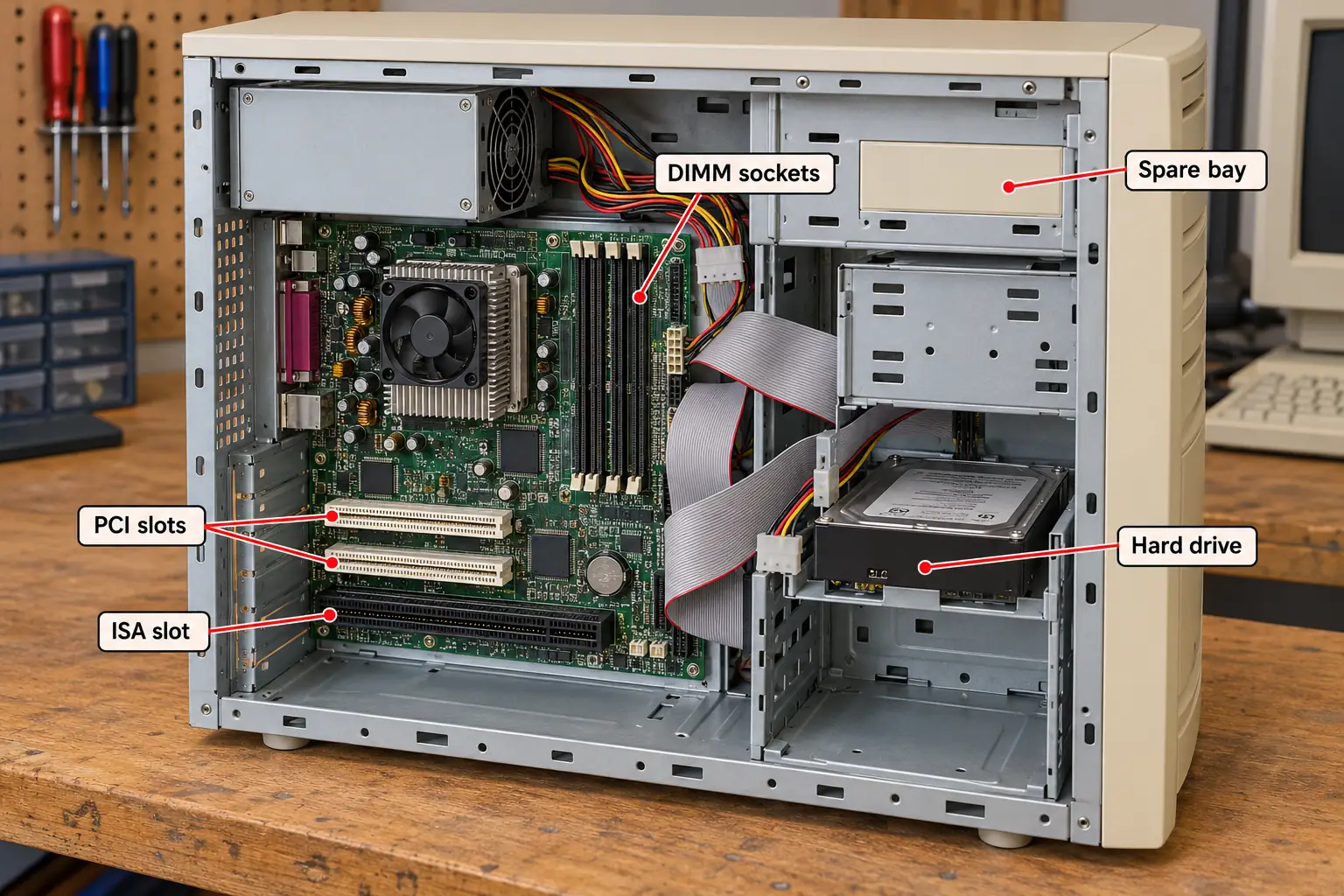
A low price did not automatically mean a sealed box or a machine that could never grow. Magid opened his particular eTower 300K. He found two PCI expansion slots and one older ISA slot. It had room for another internal drive, and he reported that its memory could grow to 256 MB.
That is a more interesting answer than either “cheap PCs were junk” or “all PCs were easy to upgrade.” One documented model had real room to expand. Other eMachines models had different cases, boards, limits, and parts. A family could add memory or a drive on some systems, but the cheapest computer did not promise an unlimited upgrade path.
Memory was the upgrade Magid wanted first. He suggested spending about $40 to move his test system from 32 MB to 64 MB. Anyone who remembers waiting for a hard drive to rattle while several Windows programs fought for memory can understand why that extra purchase mattered.
Support brought a different trade-off. On the 300K that Magid reviewed, free telephone help lasted just 15 days from the first support call. A $59 plan offered three years of support and an extension of the one-year warranty. The reviewer said he reached a technician in less than a minute when he called.
That last detail matters. It would be unfair to turn every eMachines support call into a disaster story. The documented fact is that the free support window on this model was short, while that one reporter had a quick response. Later company records also show that the firm developed a wider reputation for quality and service trouble. Both can be true.
For a first-time buyer, this was not a small issue. Someone installing a printer or trying to make a modem connect might need help weeks after opening the box. The price of the PC was visible on the shelf. The cost of needing help later was harder to see.
When the Internet Was Meant to Pay for the PC
Then came a more daring question. What if the computer could be even cheaper because internet companies paid to reach its owner?
In 1999, online-service firms offered rebates tied to long contracts. A July 1999 report explained how a $400 rebate could make a $399 eMachines tower look free. But the customer might be signing up for about $20 a month of internet service for three years. That would be around $720 in service fees, before considering a monitor or other items. “Free” depended on which part of the bill the advertisement showed.
eMachines also bought FreePC in November 1999. That was a separate venture that had given computers to a limited group of users in exchange for advertising and consumer-data arrangements. It should not be confused with the usual eTower sold at retail. In February 2000, Computerworld reported that eMachines would end free internet access for 25,000 FreePC customers. The giveaway itself had already stopped.
Meanwhile, the wider eMachines business was trying to make money from internet sign-ups, deals, and links placed on customers’ desktops. The Delaware court’s later account says the firm pushed this approach around its March 2000 stock offering, even selling some machines at or below break-even in hopes of making money elsewhere.
The hoped-for income did not cover the risk. The court reported falling sales, negative gross margins, poor quality perceptions, and operating trouble by the end of 2000. The cheap-PC business had helped get computers into homes. It had not found a dependable way to pay every bill.
Legend vs. the Record: Was an eMachines PC Really Free?
The simple version: Internet companies were handing out computers for nothing.
The record: A standard low-cost eTower was a retail product. Some rebates required long paid internet contracts; the separate FreePC program gave away a limited number of machines under advertising and data terms. The offers were not the same, and neither made the costs disappear.
The Return Pile That Could Sink a Bargain
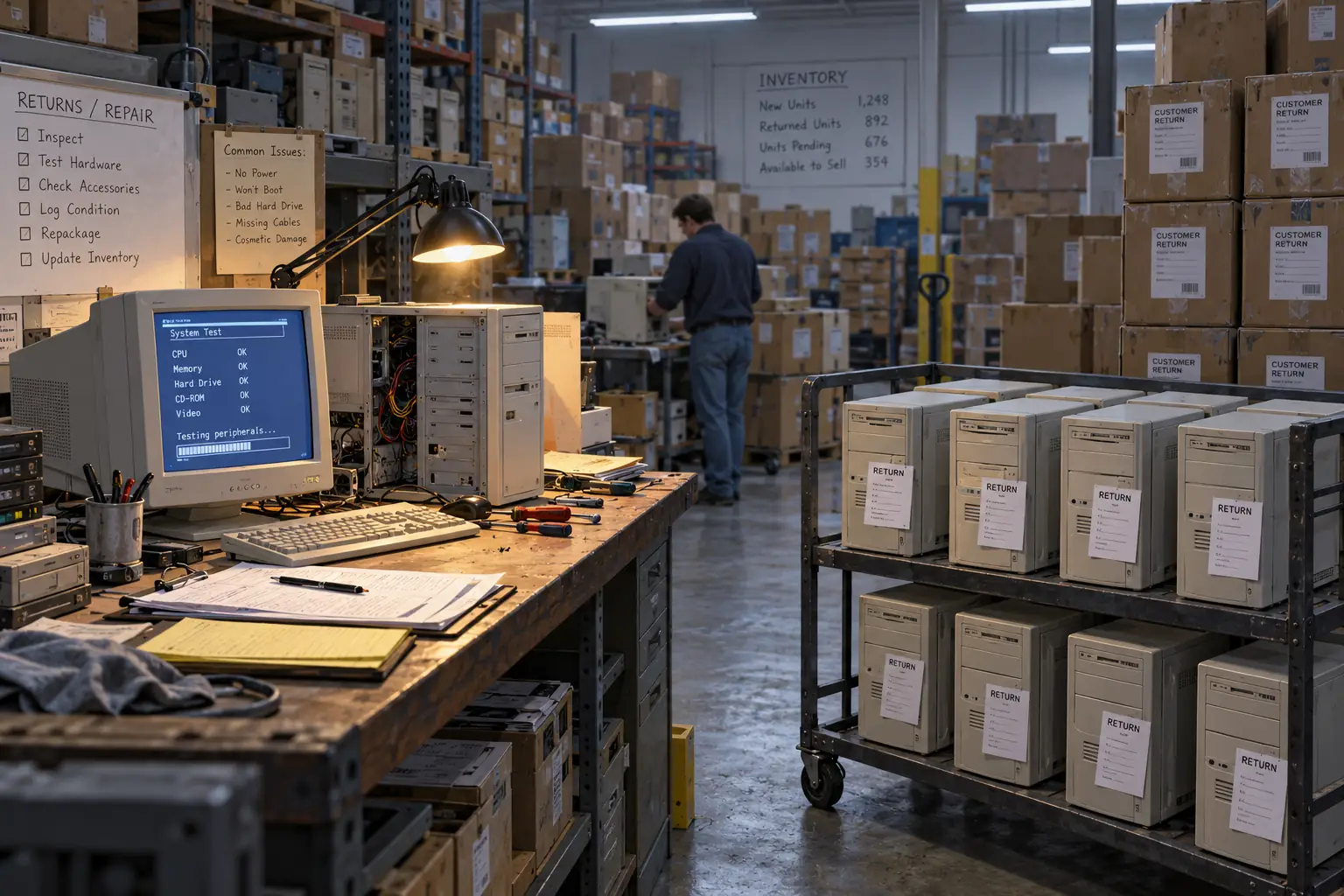
There was another painful part of the business: a returned PC was worth less than a new one. Each month brought faster chips and new offers. If a store sent a computer back, the company might pay to handle or repair it, then sell it at a lower price.
In 2001, eMachines brought in Wayne Inouye, a former Best Buy executive, as its new chief executive. He and other new managers aimed to earn money from selling hardware again, improve customer service, cut returns, and move stock faster. According to the Delaware court’s account, retailers had even started holding back invoice payments because they feared eMachines might fail and leave them with unsupported returns.
This is the part that never appeared in the cheerful store sign. The success of a bargain PC depended not only on what happened at checkout, but also on what happened when a machine came back through the warehouse door.
The turnaround goals were bold. Management wanted to halve returns and raise the rate at which inventory was sold and replaced. The court found that by the end of 2001, inventory was moving much faster, while operating changes were taking hold. This did not erase the earlier losses. It showed that the cheap-PC model could be managed better than it had been.
The stock market story was far less happy. eMachines had gone public in March 2000 at $9 per share. Its stock soon lost much of that value and was removed from Nasdaq in May 2001. Founder and director Lap Shun “John” Hui then bought the public company, taking it private in a deal valued at about $161 million at the end of 2001.
But a failed stock-market journey was not the same as the end of the company. Under private ownership, the business became profitable. By 2003, it was once again a major name in US retail desktops. The comeback was real enough that a bigger competitor wanted it.
From Bargain Tower to Gateway, Then Acer
eMachines also grew past the plainest entry-level tower. In early 2004, it offered the M6805, a notebook using AMD’s mobile Athlon 64 processor. This was no $399 family desktop. A March 2004 review discussed its $1,649 list price and the rebates that could bring it much lower. The writer praised its performance for the money. The old budget name had found a place in a more powerful machine.
On March 11, 2004, Gateway completed its acquisition of eMachines. Gateway’s annual filing later put the total purchase cost at about $262 million, including stock, cash, and deal costs. Wayne Inouye became Gateway’s chief executive.
The match made business sense. Gateway had a familiar name and a history of selling directly to customers. eMachines brought a strong retail channel and an operation built around keeping costs low. Gateway soon closed its remaining branded stores while selling more of its computers through outside retailers. The two brands could reach buyers who shopped in different ways.
Acer then completed its purchase of Gateway in 2007, bringing eMachines into a larger family of PC names. The brand stayed on sale for several more years. In January 2013, Acer announced that it would discontinue eMachines while keeping other brands. In Japan, Acer also announced the end of new eMachines development in February 2013.
Today, an old eTower is a piece of computing history, not a sensible choice for daily internet banking or modern browsing. Vintage owners may still enjoy restoring one for period games or offline software. But parts, driver support, and the condition of an individual machine vary. A working 1999 PC is not the same thing as a supported 2026 PC.
What eMachines Really Made Affordable
eMachines did not invent the inexpensive computer. It helped make the low-priced PC impossible to ignore in the American retail store. It put Windows 98, a modem, a CD-ROM drive, and useful home software within reach of people who had been priced out.
Its machines were not all identical, and the experience was not all good or all bad. One early reviewer found a useful, expandable desktop and got a quick answer on the phone. The company’s later records show what happened when slim margins, weak service, failed internet deals, and returns caught up with the business.
Perhaps the most telling detail remains that extra monitor. The $399 sign was true for the tower being advertised. It was simply not the whole desk, the whole support plan, or the whole cost of owning a PC. That was the promise and the warning of eMachines: a computer could finally be cheap enough to take home, while still asking plenty of its buyer—and the company that sold it.
Sources and Further Reading
- David Einstein, San Francisco Chronicle, October 9, 1998 — launch plan, founder’s price argument, and early hardware.
- Lawrence J. Magid, Los Angeles Times, April 12, 1999 — hands-on testing, upgrades, free phone-support window, and the full cost of a system.
- Los Angeles Times, September 1, 1999 — early sales, ownership, retail reach, and public offering plans.
- Jack McCarthy, IDG News Service, February 4, 2000 — the FreePC acquisition and the end of free internet service.
- Gholl v. eMachines, Delaware Court of Chancery, November 24, 2004 — a primary legal record covering outsourced operations, failed internet revenue, customer-service problems, returns, and the 2001 turnaround.
- Ryan Shrout, PC Perspective, March 16, 2004 — first-hand notebook test and price comparison.
- Gateway 2004 Form 10-K, filed 2005 — acquisition date, purchase price, and the role of retail distribution.
- Agam Shah, PCWorld, January 24, 2013 — Acer’s decision to end the brand.